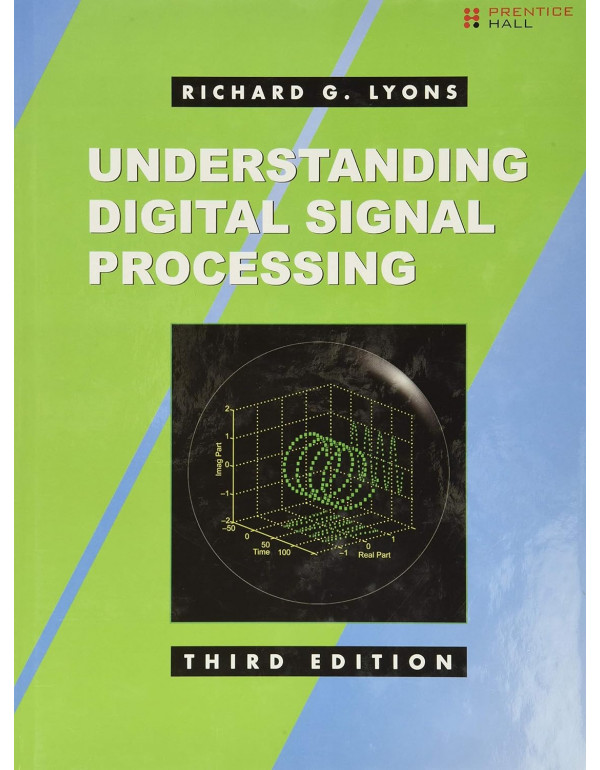
Understanding Digital Signal Processing (3rd Edition)
By Richard G. Lyons
Understanding Digital Signal Processing, Third Edition is a widely acclaimed and
highly accessible introduction to digital signal processing (DSP). Known for its clear,
intuitive explanations and strong practical orientation, this book explains not only how
DSP works, but why it works—making complex concepts easier to understand and apply.
Used extensively in both academia and industry, this edition bridges mathematical
foundations with real-world engineering practice. Lyons’ conversational style, visual
explanations, and step-by-step examples make this one of the most approachable DSP texts
available for engineers, students, and self-learners.
What This Book Covers
This book introduces the core principles of digital signal processing while emphasizing
implementation, design trade-offs, and practical application. Topics span signal analysis,
filtering, sampling theory, spectral methods, and real-world DSP system design across
communications, audio, control, and embedded systems.
Key Features of the 3rd Edition
- Intuitive explanations using analogies, diagrams, and plain language
- Comprehensive coverage of sampling, FFTs, convolution, and digital filters
- Hands-on design examples and MATLAB-style exercises
- Expanded topics including quadrature signals, modulation, and multirate DSP
- Strong focus on real-world engineering applications and implementation
Who Should Use This Book?
- Electrical and electronics engineering students
- DSP, audio, and communications engineers
- Researchers in signal, image, and control processing
- Educators teaching undergraduate or graduate DSP courses
- Self-learners seeking an intuitive DSP foundation
Why Choose BooksGoat?
- Best price: $59.99
- Free shipping on all orders
- Exclusive quiz-based discount (score 75%+ and save 5%)
- Eco-friendly packaging
- Fast, secure delivery
The most approachable and application-focused DSP textbook available.
Order today from BooksGoat and master digital signal processing.